Travis McCoy's professional football career ending
The Journey CollectionTravis McCoy's professional football career ending transforms the central achievement of his life into the crisis that makes a different life possible. After six years as the Miami Sharks' star quarterback, a shoulder injury places him on the reserved list and ultimately prevents him from playing again. The loss threatens not only his livelihood but also the public identity, team belonging, and childhood dream through which he has understood himself. Retirement becomes painful precisely because it is not merely the end of a job: it is the forced surrender of the person he believed he had spent his whole life becoming.
Injury and the Collapse of the Playing Career
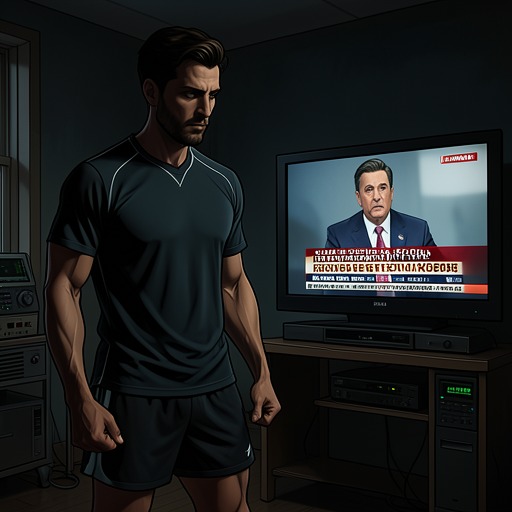
Travis's professional status has already become unstable when the story presents him at home in his small Miami apartment. Television reporter Tamara Roberts announces that the Miami Sharks quarterback is not expected to return for the rest of the season and questions whether he will recover in time for the next year. The report turns his private physical uncertainty into public speculation. Travis responds by shutting off the television, irritated that the broadcast has added another voice to the doubt surrounding his recovery.
The injury is later stated more directly: his shoulder has been placed on the reserved list, and Stewart Thornton, the owner of the Miami Sharks, has not cleared him to play. Stewart acknowledges that the shoulder will never be strong enough for Travis to return as a player. The medical and institutional decision therefore closes the possibility of a comeback, even while the surrounding publicity continues to treat his condition as a story still open to debate.
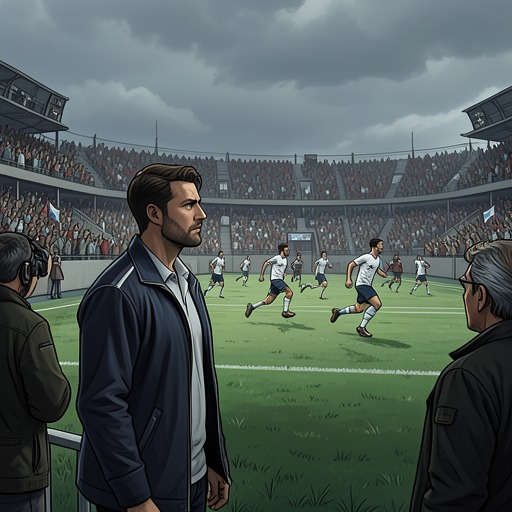
The setback is especially severe because football has been inseparable from Travis's earliest ambitions. He recalls dreaming since childhood of standing in the middle of the largest stadium in the world while people chanted his name, and he remembers sleeping with his football. He can recognize that his career has been unusually successful, with more wins than losses, yet that achievement does not make the ending easy. The better the career has been, the more completely retirement threatens the structure of his identity.
Public Celebrity and the Retirement Narrative
The ending of Travis's career unfolds under constant media observation. During his return from Miami to Amarillo, he disguises himself with sunglasses and a baseball cap, but his six years in professional football still make him recognizable. Passengers ask him to autograph newspapers, magazines, and even barf bags. The Sharks had been one game away from the national championship the previous season and were considered favorites for the next one, making Travis's absence appear to the public as a missing piece in a championship campaign.
The media repeatedly supplies competing explanations for his departure. Tamara Roberts reports that Travis is leaving the Miami Sharks after turning down an offer to become the new special teams coach, while also emphasizing that Malcolm Rollins has led the team to victory against Denver. Another report reduces the situation to a shoulder injury and a decision not to clear him to play. At the airport, a fan recognizes him, expresses disbelief that he is quitting, and suggests that he simply could not get over his last hit. The public thus interprets retirement through fragments of injury news, team rumors, and celebrity commentary rather than through Travis's own account.
Travis resists that public simplification. When he finds another newspaper article bearing Tamara Roberts's byline, he sees that it repeats the same information already circulating through every paper and news channel. He remarks that the media seem determined to make more of his departure than it contains. His irritation is not only resistance to publicity; it is also a struggle to reclaim the meaning of an ending that others have converted into spectacle.
The Refused Coaching Bridge
Stewart Thornton offers Travis a way to remain inside professional football by taking over for Jerry Morton as head coach of special teams. The proposal recognizes Travis's experience and gives him a formal position within the organization, but it does not answer the deeper problem. Coaching would preserve his connection to the Miami Sharks while requiring him to accept that he can no longer perform the role that made him famous.
Travis ultimately refuses the offer. He explains that he returned to Texas to settle unresolved matters before deciding what his future would be, and that the journey revealed where his future actually lay. Penelope Stone and Max are there, along with people who love him and need him. His decision therefore changes the meaning of loyalty: he does not reject the Miami Sharks because the team has become worthless, but because family has become more important than remaining attached to the professional game.
The refusal also distinguishes retirement from defeat. Travis tells Stewart that he has loved his six years with the Miami Sharks and appreciates everything the organization has done for him. He accepts that the playing career is over, but he will not allow the team's offer to dictate the form of his next life. When teammates question whether he will regret watching them win a championship from home, he admits that leaving is difficult, yet his thoughts return to Penelope and Max. He tells the team that it is time for him to move on, even as he acknowledges how much the players have supported him.
From Athlete to Family Member and Teacher
The career ending produces a new sequence of identities rather than an empty aftermath. In Clarendon, Travis encounters the community that once knew him as a local football hero. At the Homecoming pep rally, the school presents him as a celebrated alumnus and former member of a state-tournament team. He leads the boys through the Lord's Prayer before they run onto the field, and the town's ceremony joins football, faith, school tradition, and civic belonging. The scene shows that his authority has not vanished with professional play; it has begun to change form.
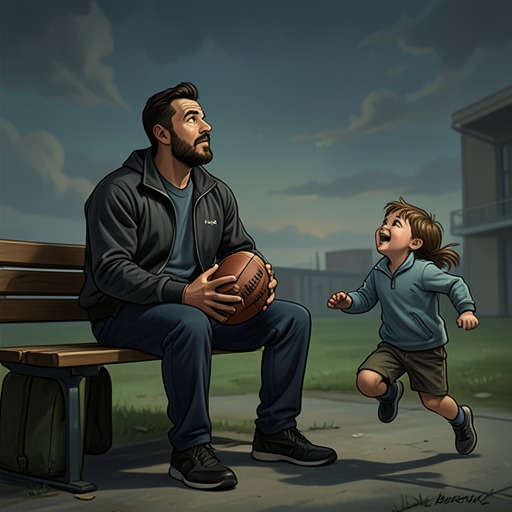
Travis's most consequential new role is fatherhood. After returning home, he faces the past he had postponed while pursuing football and discovers that Max is his son. The revelation makes the timing of the injury narratively significant: the career that once kept him moving away from Clarendon ends just as Max brings him back into the life he had missed. Travis initially feels anger over losing the chance to be Max's father from the beginning, but he comes to understand why Penelope concealed the pregnancy. He recognizes that, at eighteen, he might have resented a child for interrupting the dream he thought he wanted more than anything.
The end of professional football also permits Travis to convert his experience into education and coaching. By the time of his engagement celebration, he has passed the examination required for his new professional direction and accepted a position. Two days after he tells Jack Garrison about accepting the job, news spreads through town and Travis receives at least ten congratulatory calls a day. His nervousness reveals that the transition is not effortless: public admiration, once attached to his athletic achievements, now creates pressure around an unfamiliar future. Nevertheless, the position gives his football knowledge a local and constructive purpose rather than returning him to the professional system he has left.
Consequences and Narrative Significance
Two years after the injury ends his professional career, Travis's life is described as fundamentally changed. He came home prepared to fight with Russ McCoy over the choices that had shaped their family, but father and son instead exposed their wounds and began repairing their relationship. Their reconciliation makes the career ending part of a wider restoration: the loss of Travis's athletic future brings him into contact with the father, partner, and son he had not learned to prioritize.
The ending of football also allows Travis and Penelope Stone to recover the possibility of becoming a family. Travis realizes that he still loves Penelope and needs her as much as he needs Max. The professional identity that once demanded total devotion is displaced by a relational identity built around presence, responsibility, and mutual dependence. His later wedding preparations, his acceptance of a local position, and his movement toward family life all confirm that retirement has become a beginning as well as an ending.
The event therefore changes the value attached to football without erasing football's importance. Travis does not discover that the game meant nothing; he discovers that it cannot be the only thing that matters. The stadium, the cheers, the Miami Sharks, and the possibility of a championship remain emotionally powerful, but they no longer define the whole of his future. Professional football ends as a career, while its discipline, knowledge, community, and symbolic power are carried into fatherhood, teaching, coaching, and reconciliation. The decisive movement is from athlete to former athlete, from celebrity to participant in a local community, and from a man measured by victories to a man responsible for the people who need him.